
October 2, 2026
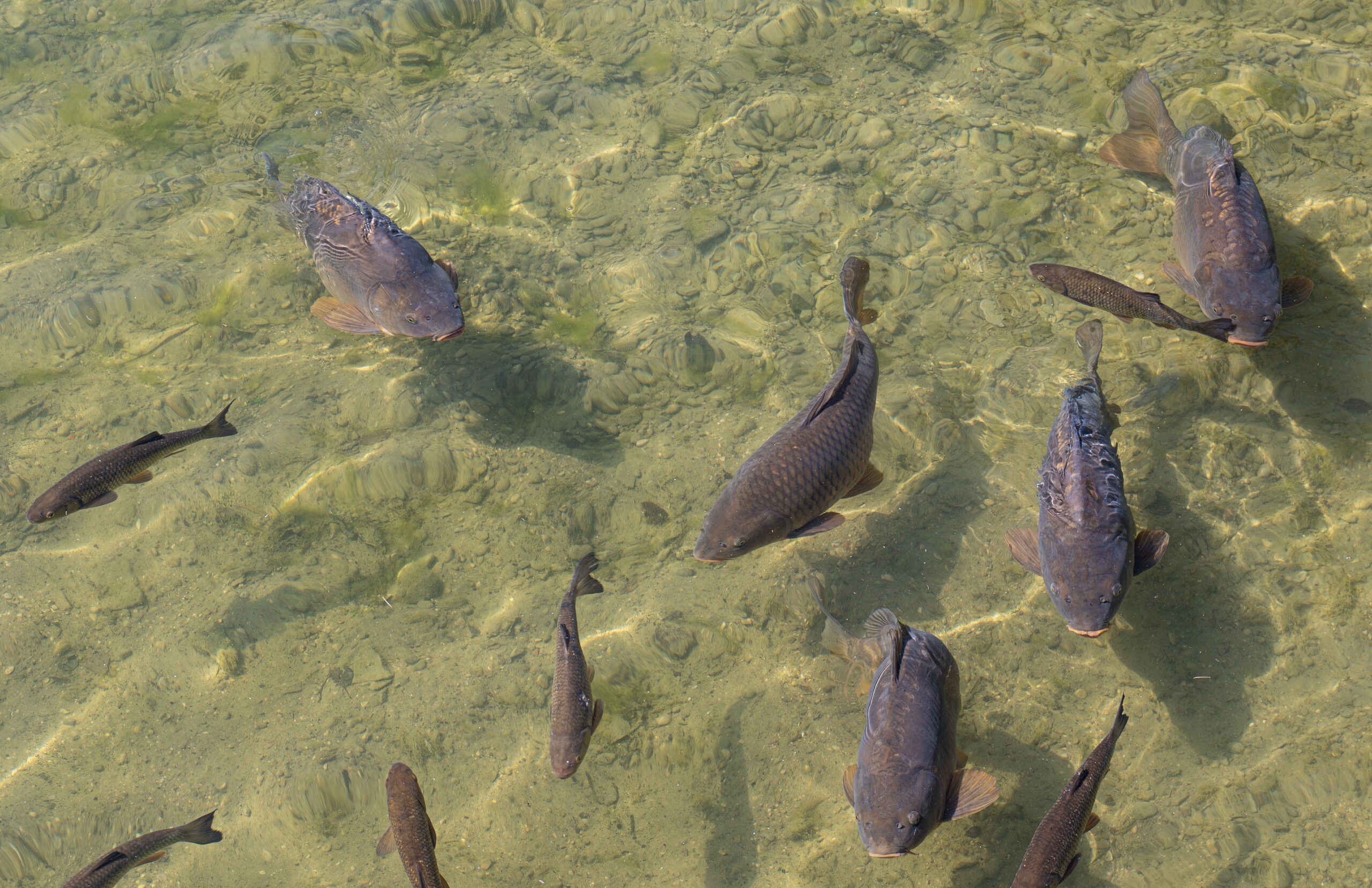
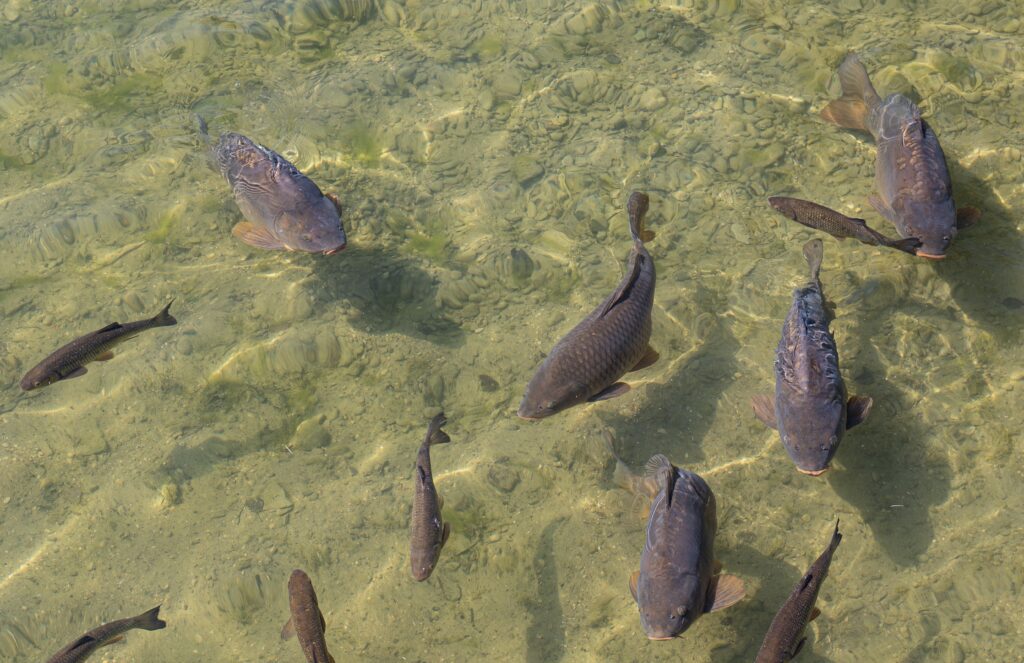
Despite their doleful looks, common carp have become widespread across the Okanagan and are considered one of the most damaging aquatic invasive species. Native to Europe and Asia, but now considered invasive across 59 countries, their feeding habits significantly disrupt habitats for plants and other animals.
Invasive Species Online Okanagan states that carp were first introduced into the Valley in 1912, while Chris Bull, former head of the Fisheries Section in the Okanagan Region for the B.C. Minister of Environment, suggests that the first carp was seen in Okanagan Lake in 1926 (75th Report of the Okanagan Historical Society, 2011).
Prior to settler contact, the syilx Okanagan People relied on a variety of fish species for sustenance, with salmon holding particular cultural significance. The Okanagan was already home to approximately 20 species of native fish when early settlers began introducing additional species. At the time, non-Indigenous understandings of ecology were still developing, and there was limited awareness of the potential consequences of introducing new species into existing ecosystems. Instead, these introductions were largely seen as a way to increase the variety and abundance of fish available for harvest.
Starting around the turn of the 20th century, several species of fish were introduced to Okanagan Lake, including carp, whitefish, bullheads, perch, sunfish, and bass, in the hopes of starting a commercial fishery.
In a mere ten years, the population of invasive carp had become so widespread that the Vernon and District Fish and Game Protective Association trapped and eradicated 40,000 of them in 1936 before deciding the task was futile. Indeed, carp are particularly prolific breeders; a single female carp can produce 100,000 to 300,000 eggs per kilogram of body weight.
In the decades since their introduction, carp have spread to virtually every waterway in the Valley. In August 2026, members of the North Okanagan Naturalist Club (NONC) drew attention to excessive numbers of carp gathering in the remaining pools of a drought-stricken Vernon Creek. In September, Castanet reminded readers that carp can be harvested by angling in accordance with provincial freshwater fishing regulations, and that there is no limit on the number of carp that can be harvested.
However, it may be the case that other approaches to managing excessive carp populations in Vernon and beyond have been explored over the years. Word of mouth suggests that a Vernon-based business in the 1970s harvested invasive carp for use as fertilizer. The Vernon Museum and NONC are asking anyone with additional information about this business or its activities to please contact gwyn.evans@vernonmuseum.ca, as this information will help inform NONC’s Watershed Stewards program.
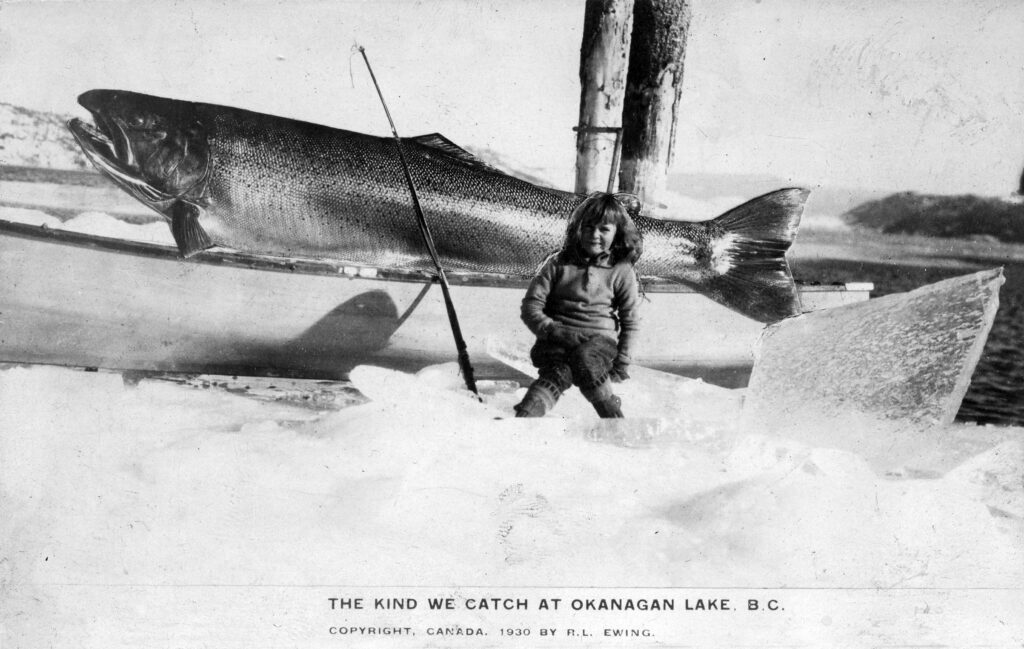
Photo information: An exaggerated 1930 postcard depicting the type of fish available in Okanagan Lake. Although the fish depicted is not a carp, the exaggerated size seems fitting given the scale of the problem this species causes in the Valley.
Sources:
Morphology, Composition and Fertilization of Carp Eggs: a Review by Otomar Linhart, Shigeharu Kudo, Roland Billard, Vlastimil Slechta, and Ekatherine V. Mikodina: https://www.sciencedirect.com/science/article/abs/pii/004484869400230L
No Limit on Number of Carp an Angler can Catch in the Okanagan by Darren Handschuh: https://www.castanet.net/news/Vernon/630705/No-limit-on-number-of-carp-an-angler-can-catch-in-the-Okanagan
Invasive Species Online Okanagan: https://www.oiso.ca/species/common-carp/
Fish in Okanagan Lakes and Rivers: A Historical Overview (OHS 75th Report, 2011) by Chris Bull: https://bcrdh.ca/bcrdh/ohs/4728?search=%22carp%22
Archives Manager, Gwyneth Evans