
August 22, 2026
The Vernon Airport is celebrating 80 years of history in 2026. In 1946, the airport moved from its previous location on Mission Hill to its current site in Okanagan Landing. A community celebration to learn more about the history of the current site, as well as the Vernon Flying Club, will be held at the airport on August 23 from 10 a.m. to 3 p.m.
In 1940, the City began looking for a new location for an airport after the licence for the previous site was cancelled by the federal government. The Department of National Defence was expanding Camp Vernon as part of the war effort, making the site on Mission Hill unavailable.
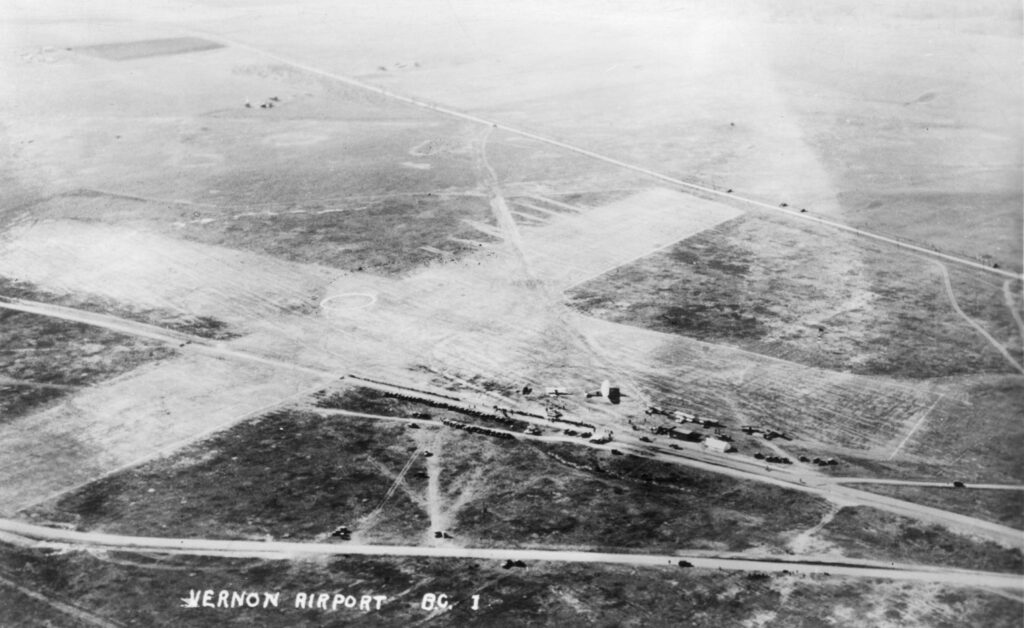
By 1945, a new site on Tronson Road had been selected, which required the purchase of land from OKIB Reserve #6 (Priest’s Valley). By 1947, a licence for the airport had been secured and the airstrip was being well used for non-commercial flights. The first passenger flight took off in 1949.
As Vernon’s airport developed, however, competition for a larger role in the region’s air service began to emerge close to home. In 1946, Kelowna residents voted to purchase a 320-acre property near Ellison (Duck) Lake for an airport, and the first flight took off from the site in 1947.
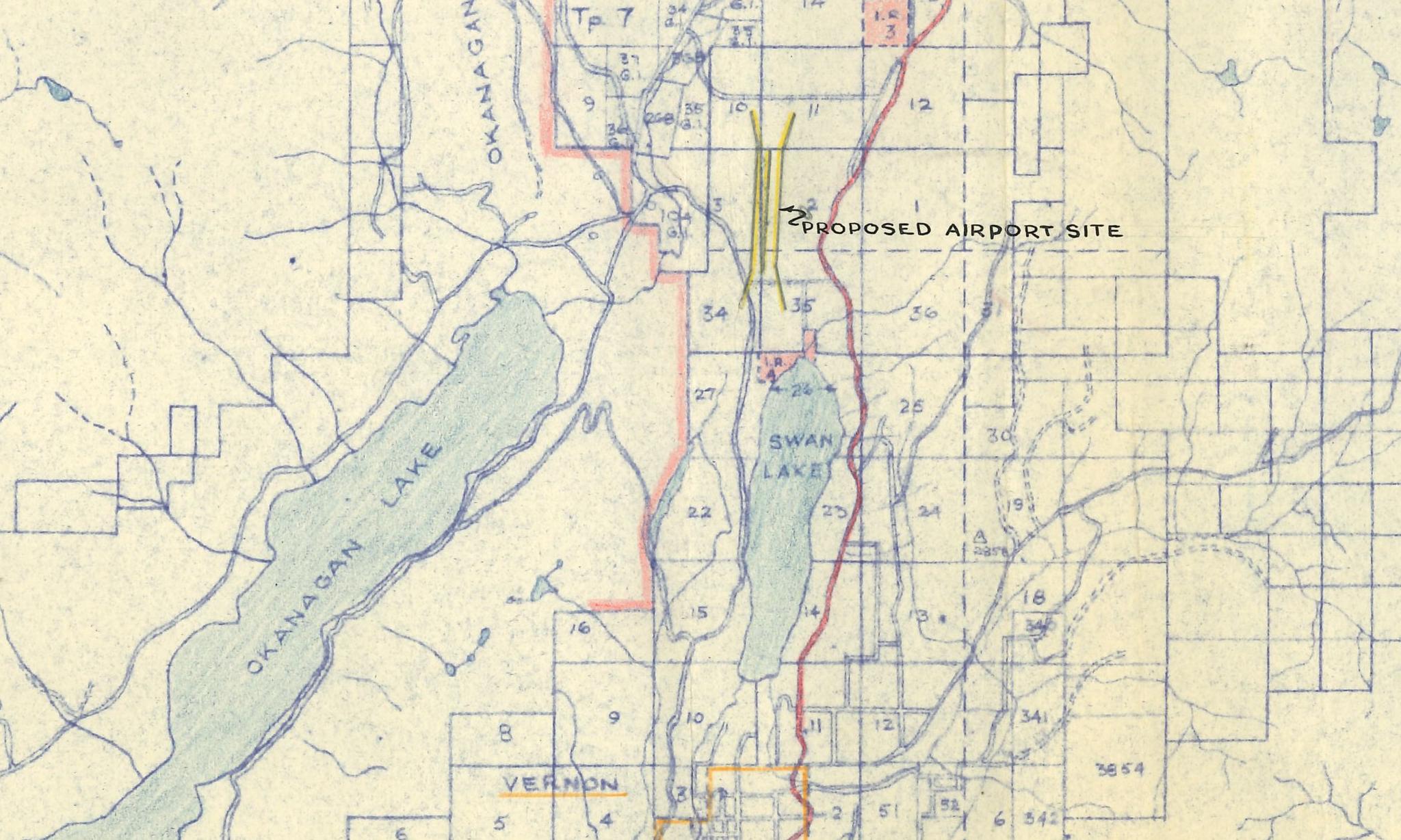
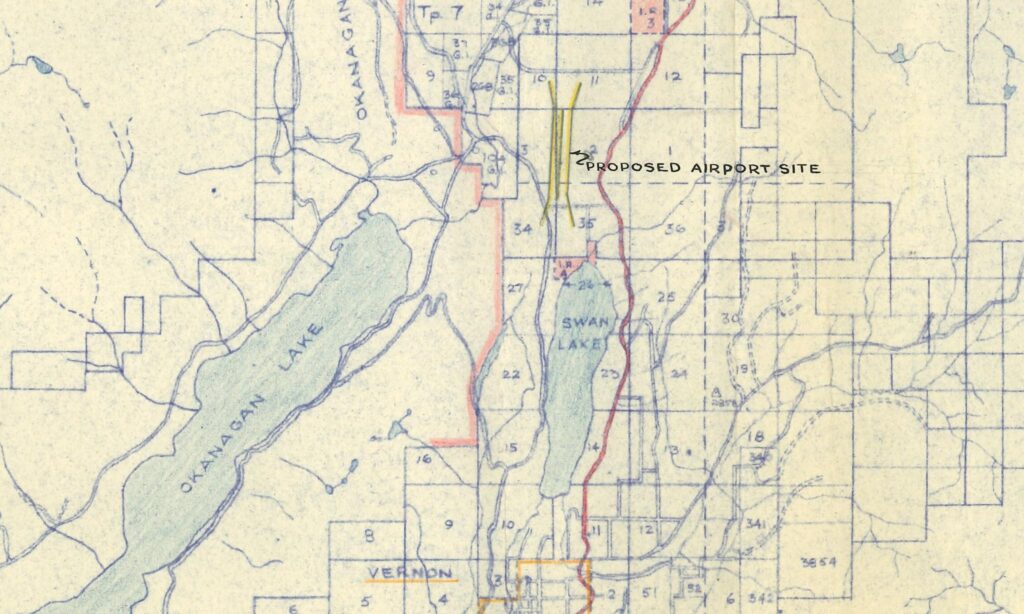
Increasing demand for better air service led Kelowna to approach Vernon in the 1950s for support in developing the Kelowna Airport as the major hub for the Valley. Vernon’s own airstrip was also seeing increasing demand, but city officials had begun exploring the development of a new airport north of Swan Lake on the L & A Ranch, as the existing site offered little room for expansion.
According to Vernon City Council meeting minutes, Kelowna was concerned that the proposed L & A Ranch airport could affect plans to improve its own airport. The city therefore asked Vernon to support the development of the Kelowna airport instead. While Vernon initially appeared willing to do so, officials later expressed some hesitation as they explored whether Vernon could instead take on a larger regional role. Kelowna Mayor Richard Parkinson responded that if Vernon refused to support the Kelowna airport, Kelowna would proceed with its plans for the Ellison site.
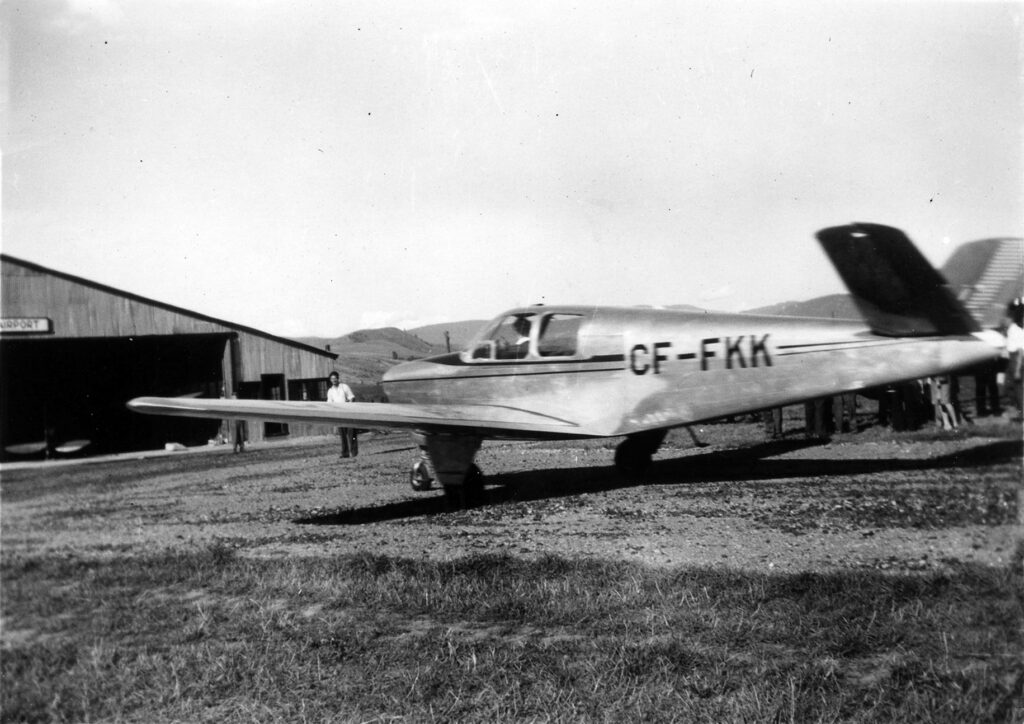
The Ministry of Transport investigated the potential of the L & A Ranch site but ultimately supported the Kelowna site for expansion. The Ministry also assisted with improvements to the airport, including graveling the airstrip and paving the parking lot and aircraft parking apron. Vernon Mayor Frank Becker was disappointed with the decision, saying that the Ministry had bowed to political pressure.
Local support for the Swan Lake airstrip continued into the late 1960s, although concerns about the proposal were beginning to emerge. A local regional planner declared the soil unsuitable for the development of an airport, while the North Okanagan Naturalists’ Club also opposed the proposal over concerns about the potential impact on migratory birds at Swan Lake.
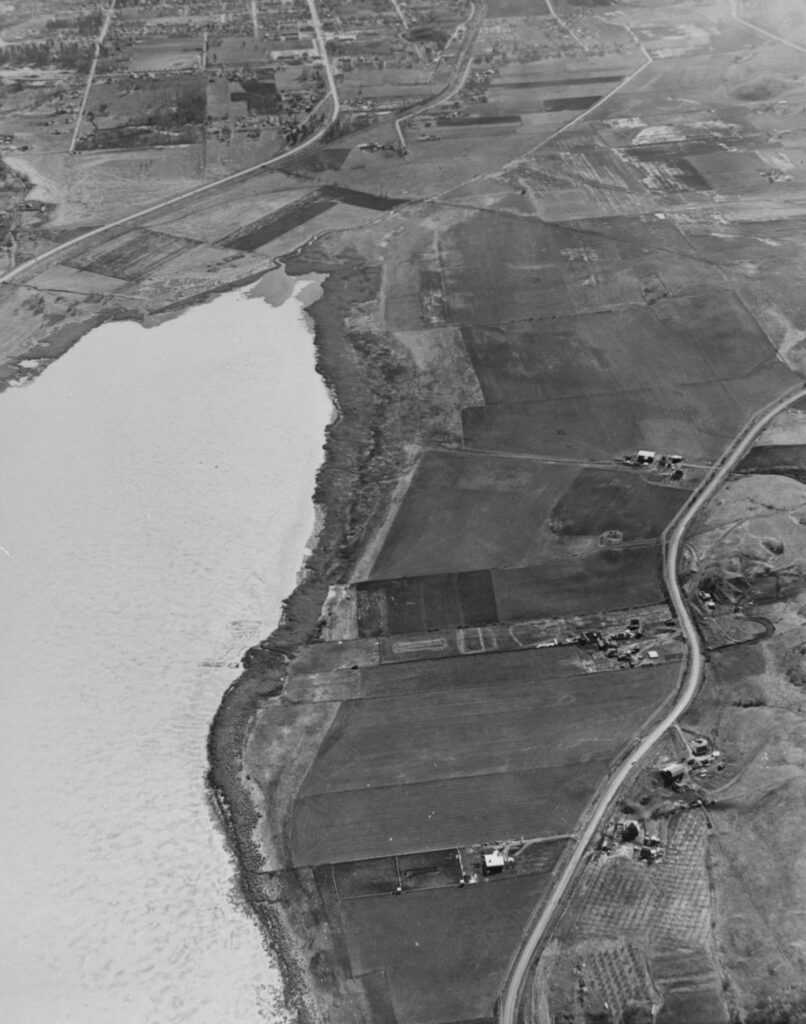
The L & A Ranch proposal eventually faded, and attention turned in the 1980s to upgrading the existing airport as a regional facility, while Kelowna took on the larger role for air service internationally. Today, the Vernon Airport continues to serve the community, 80 years after moving to its current location, and has played an important role in supporting wildfire aviation in recent weeks.
Archives Manager, Gwyneth Evans