

Camping has been a beloved summer tradition for generations, but it looked quite different over a century ago. In the 1880s, camping was often a matter of necessity rather than recreation. There were round-up camps, railroad camps, survey camps, hunting camps, and long-standing Indigenous camps, each serving a specific purpose tied to work or daily life.
It was not until the late 19th century that camping began to take on a recreational tone. Around the 1870s, wealthier Victorians started to seek out time in nature for rest and reflection. For them, camping was a break from the increasingly industrialized world. It became fashionable to “rough it” outdoors, even if the experience was carefully curated and supported by servants or hired Indigenous guides.
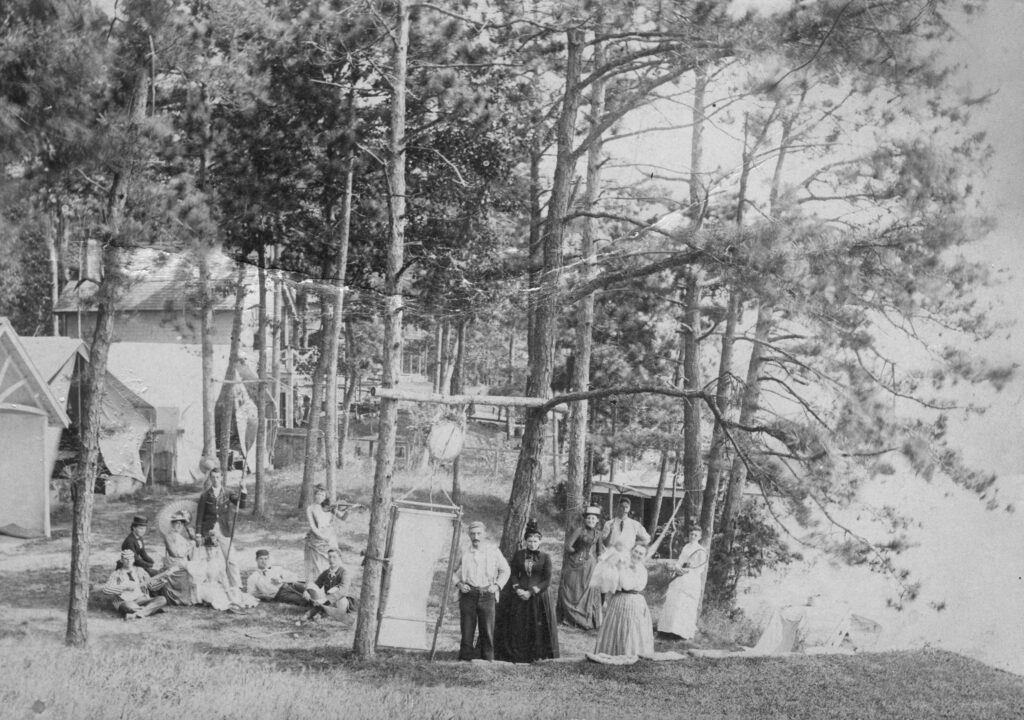
Some families embraced a rustic lifestyle during their trips, packing minimally and even relaxing traditional gender roles. Others preferred a more refined approach, with elegant tents, formal dress, and a social atmosphere. These early recreational campers helped popularize what would eventually become a mainstream summer activity.
In the Okanagan, recreational camping was well established by the early 20th century. In 1904, the Vernon News reported that Long Lake (now Kalamalka Lake) had become a summer destination, with many families setting up tents to enjoy the season. By 1910, Cameron Point near present-day Ellison Provincial Park had also gained popularity, although that same year it was purchased for future development.
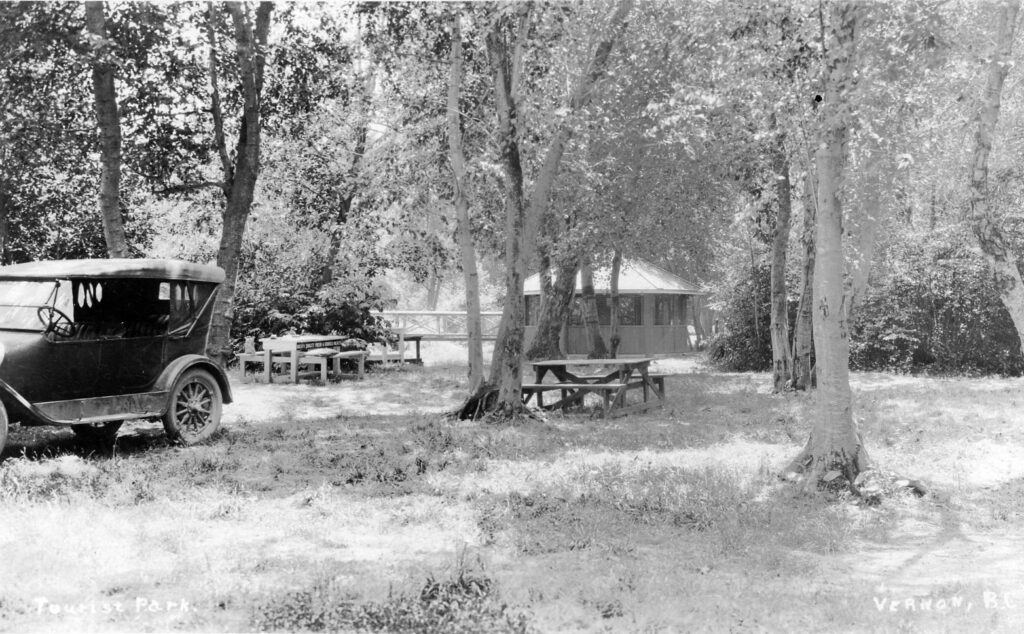
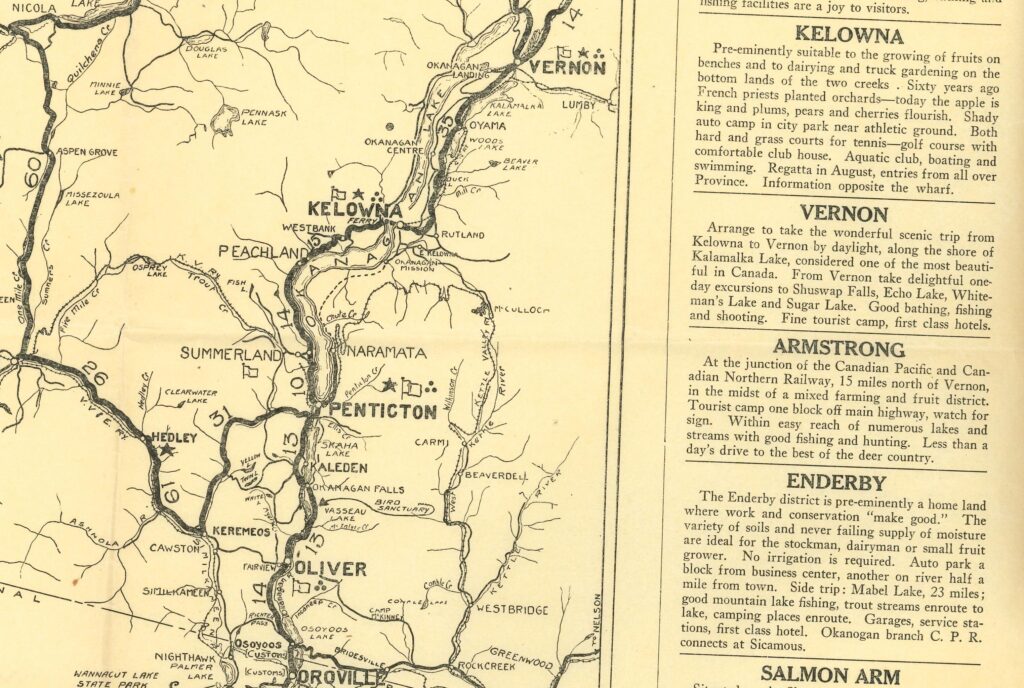
As automobile travel became more common, roadside tourism grew. In 1923, Vernon responded by opening a Motor Tourist Park in Polson Park. The site offered lighting, water, a cooking shed, and basic sanitation—simple but significant amenities for travelers. In 1925, the “Okanogan-Cariboo Trail” map was introduced to guide tourists through the region. The spelling “Okanogan” reflects the map’s American audience, as it was distributed widely in Washington State in an attempt to bring visitors north.
By July 1927, Polson Park’s Motor Tourist Park welcomed 251 cars in just one month. Visitors appreciated its convenient location and, notably, the absence of mosquitoes. In 1929, some visitors expressed interest in cabin accommodations, believing they would stay longer if such options were available. While the City decided not to build cabins in the park, private campgrounds were already beginning to take shape nearby.
One such development came in 1930 when local investor S. P. Seymour purchased land at the head of Kalamalka Lake and opened five cabins. By 1933, as private campgrounds became well established throughout the region, Vernon’s Motor Tourist Park at Polson Park closed. Over the decades, camping in the Okanagan has evolved from a necessity tied to work and survival into a popular summer pastime. Through all these changes, the love of nature and the spirit of adventure have remained at the heart of the experience.

Archives Manager, Gwyneth Evans