
February 13, 2026
What would it have been like to be a musical accompanist for silent movies? Before recorded soundtracks, films depended on live music to convey emotion, pace, and drama. At Vernon’s Empress Theatre, which opened in 1912, silent films were the norm until the 1930s, and musical accompaniment was provided by members of the local community. Their playing shaped how audiences experienced early cinema.

One such accompanist was Marion Kermode, often known as May. She was the wife of John Kermode and the mother of Doug Kermode, who would later become one of Vernon’s most celebrated photographers. Marion was born in Liverpool, England, and immigrated to Canada at the age of ten. She and John were married in Vernon on April 28, 1910, and moved into a three-bedroom home where Marion took great pride in keeping house. A particular point of pride was the piano her parents gave the couple as a wedding gift, an instrument that would remain central to her life.
In 1916, an orchestra pit—complete with a piano—was installed at the Empress Theatre. The pit was used not only for silent films but also for live performances. After spending time in Saskatchewan, where the family’s piano was packed away, John and Marion returned to Vernon in 1921. The following decade brought significant challenges, including health issues and financial strain, but Marion continued to play music and participate in community life as an accomplished pianist.
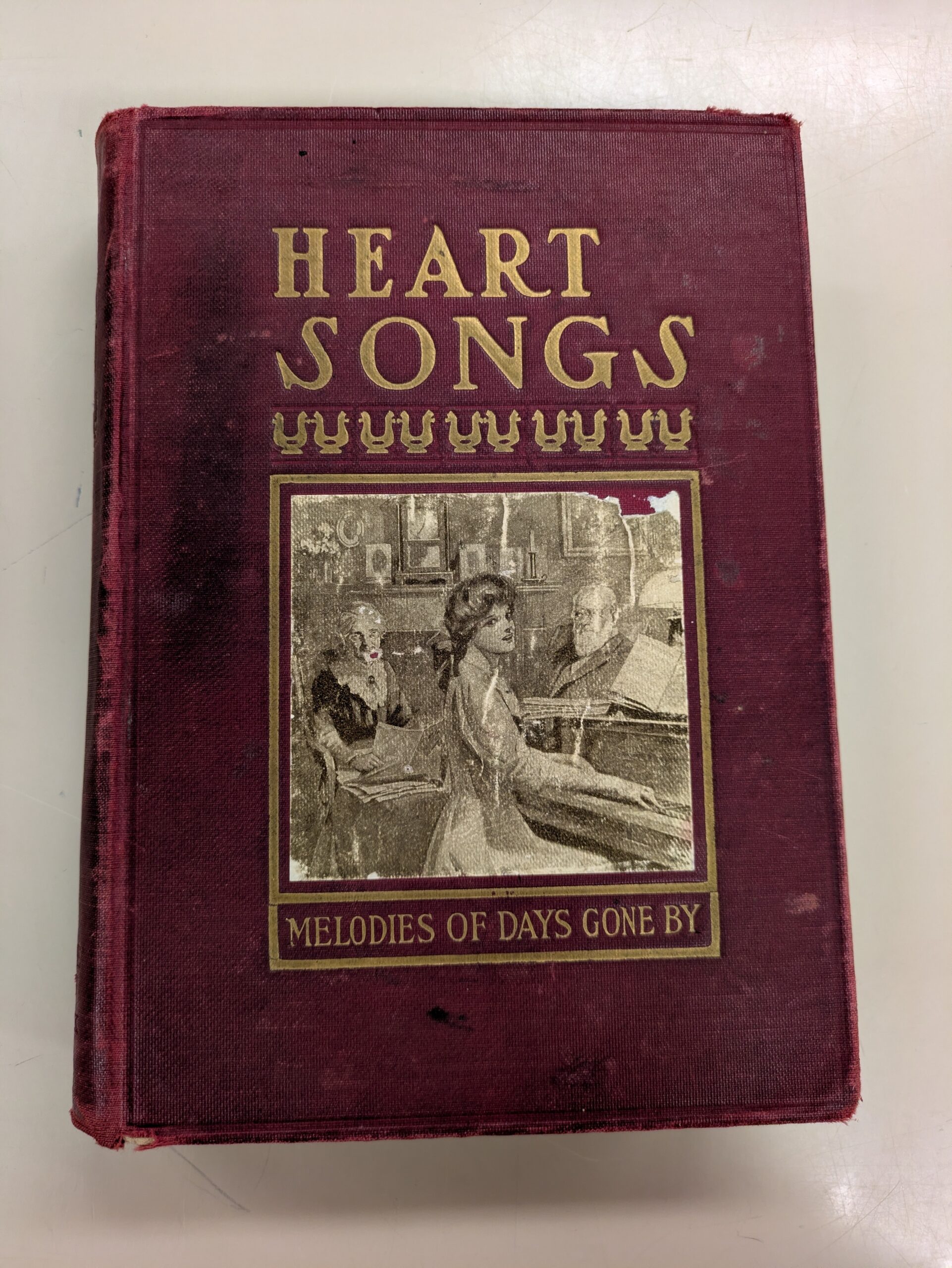
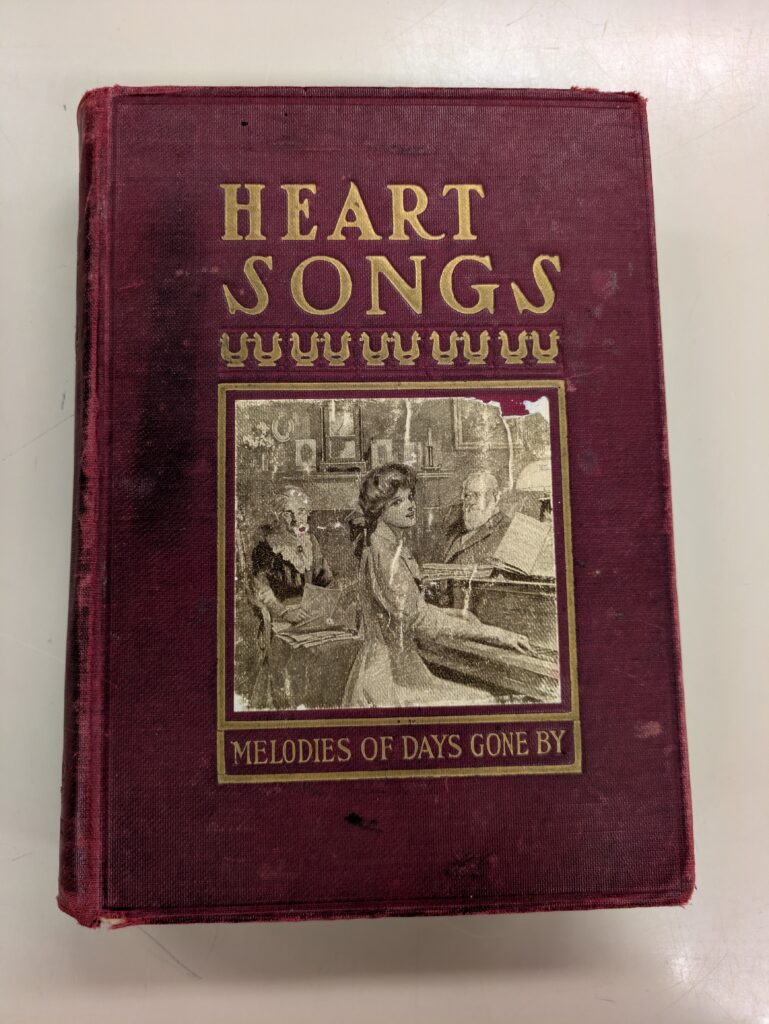
Not all silent films were accompanied in the same way. Some arrived with “official” scores that distributors expected to be followed. Charlie Chaplin, for example, composed music for several of his own silent films and provided specific instructions for their accompaniment. Other films allowed much more flexibility, giving accompanists the opportunity to improvise or select their own repertoire. Marion drew from published songbooks such as Heart Songs: Melodies of Days Gone By (1909) and the University of Toronto Song Book (1887), both of which are now held in the collections of the Vernon Archives.
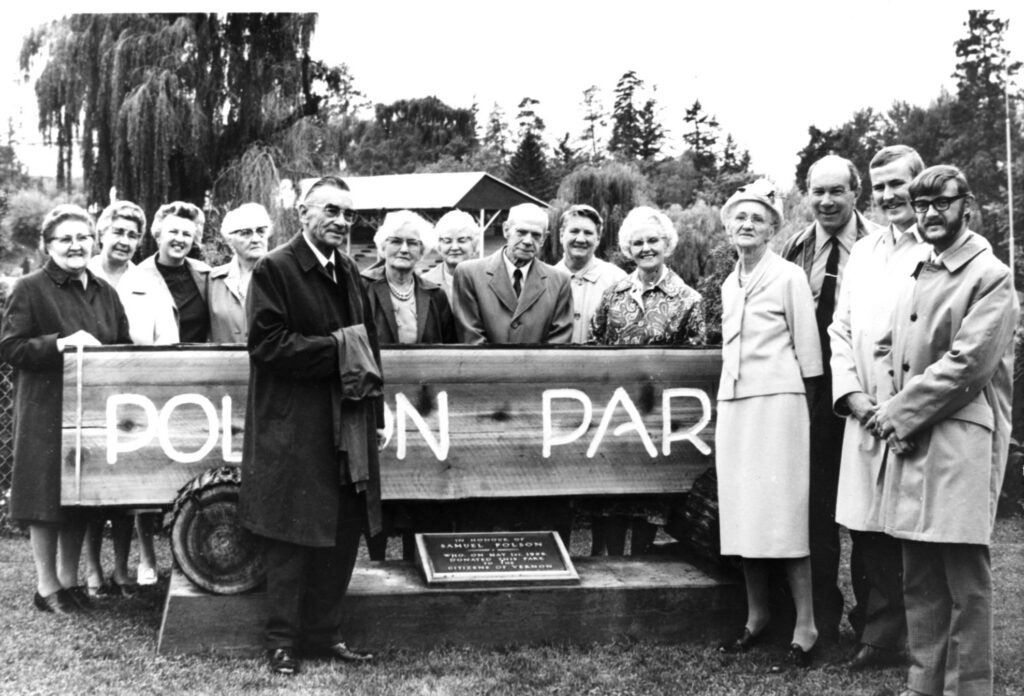
In her later years, Marion remained an active and engaged community member. She lived to see the birth of her grandchildren and great-grandchildren, and shortly before her passing successfully lobbied Vernon City Council to erect a sign at the east entrance of Polson Park in honour of her longtime friend Samuel Polson. She died in 1972, leaving behind a quiet but meaningful legacy of music, family, and community involvement.
Archives Manager, Gwyneth Evans