
May 9, 2026
Located on the Traditional Territory of the Splatsin First Nation, Vernon’s neighbouring community of Lumby was settled largely by eastern Canadians during the late 1800s. Although a wave of development took place between the 1890s and the 1910s, the community remained relatively isolated. Transporting goods to market posed a major challenge for local farmers and businesses.
At the time, Vernon served as the closest distribution point to wider markets because of the terminus of the S&O Railway, a CPR spur line, at Okanagan Landing. While the two communities were not far apart geographically, travel before the age of automobiles could take two full days for a round trip, particularly in poor weather.
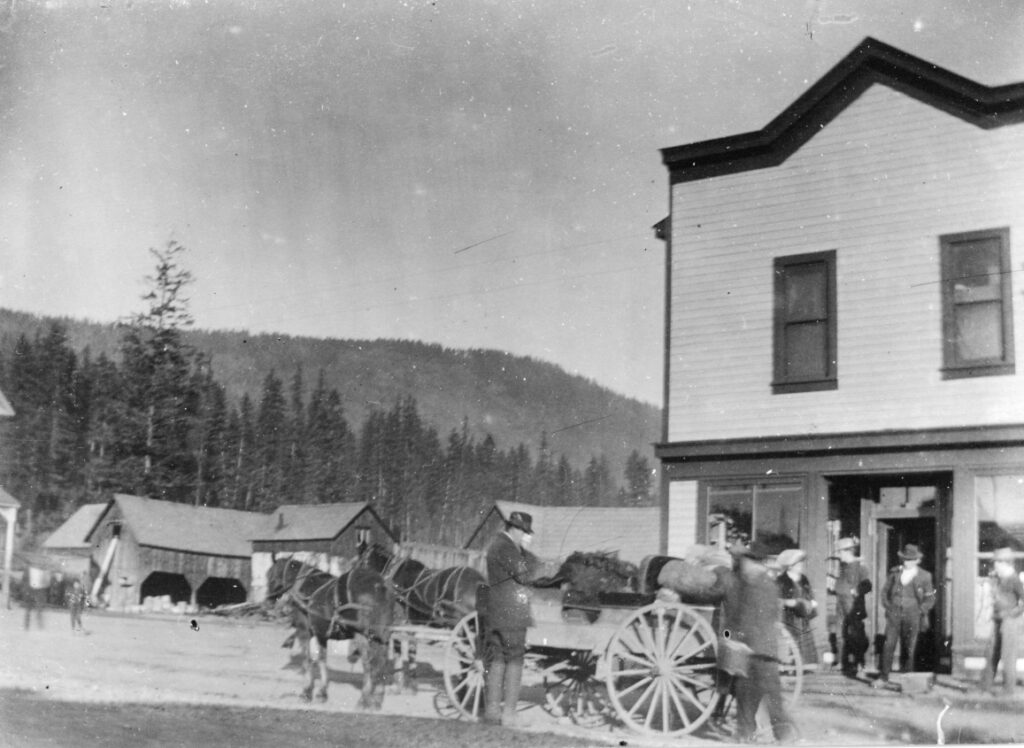
As early as 1902, residents of both Lumby and Vernon began advocating for the construction of an electric tramline connecting the two communities. During a February 13 meeting that year, farmers from Lumby and White Valley described the difficulties they faced getting produce to market. Price Ellison, then a member of British Columbia’s Legislative Assembly, spoke about what would be required to make the project a reality. He recommended hiring engineers to survey the proposed route, estimate construction costs, and assess the feasibility of generating hydroelectric power at Shuswap Falls. Ellison estimated the project could cost as much as $150,000 and suggested obtaining a charter under the B.C. Tramway Act. He also pledged to use his political influence to support the proposal.
Support for the tramline extended beyond agriculture. Vernon merchant W. R. Megaw believed local manufacturers and businesses would back the scheme, remarking that Vernon residents were “hand-in-hand with the Lumby people on this question” and could be relied upon to support the effort. Following the discussion, Government Agent Leonard Norris proposed forming a committee with representatives from both Lumby and Vernon to advance the project. The committee included Norris, Ellison, and Megaw.
Despite the excitement surrounding the proposal, some farmers worried they would be expected to shoulder part of the cost, something many could not afford. Still, enthusiasm remained high. One editorial published in the Vernon News suggested that improved transportation might even encourage crop diversification, as years of growing timothy hay and wheat were beginning to deplete White Valley farmland.
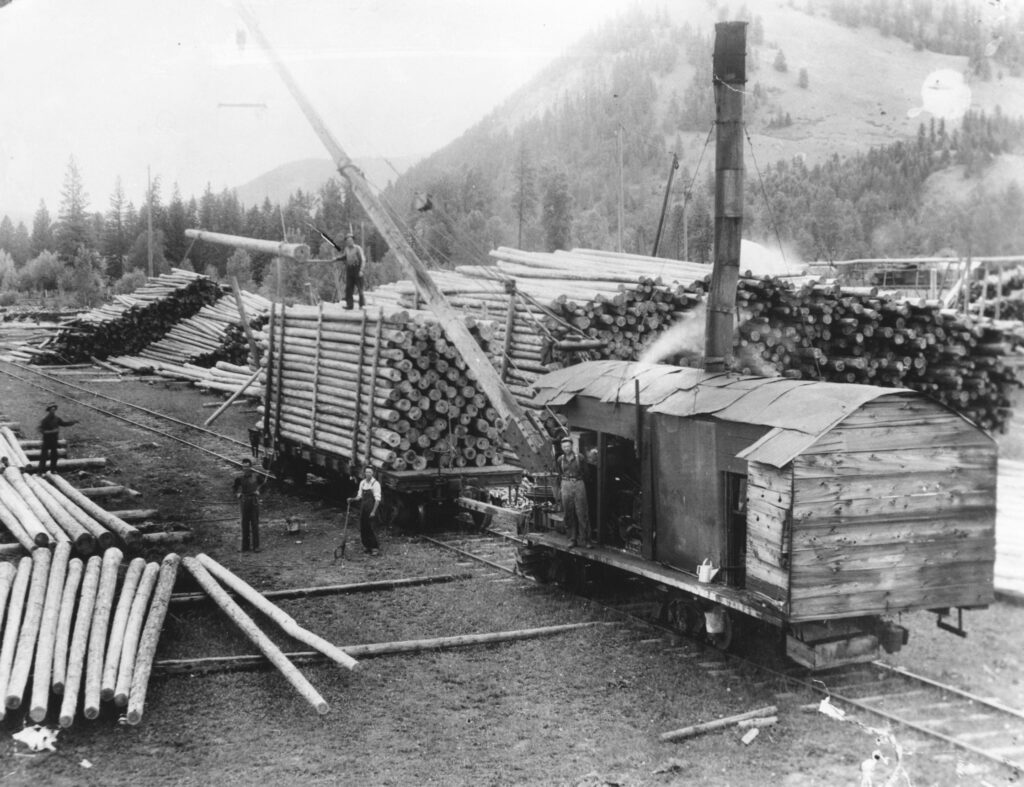
In the end, however, the electric tramline was never built. Instead, the CNR extended a rail line into Lumby in 1924. The arrival of the railway, along with businesses such as Bell Lumber & Pole, helped fuel significant growth in the community’s logging sector. Had the proposed electric tramline been constructed, it would have been remarkably innovative for its time. Outside of Nelson, which introduced an electric streetcar system in 1899, the only electric tram systems in British Columbia at the time were limited to the Lower Mainland.
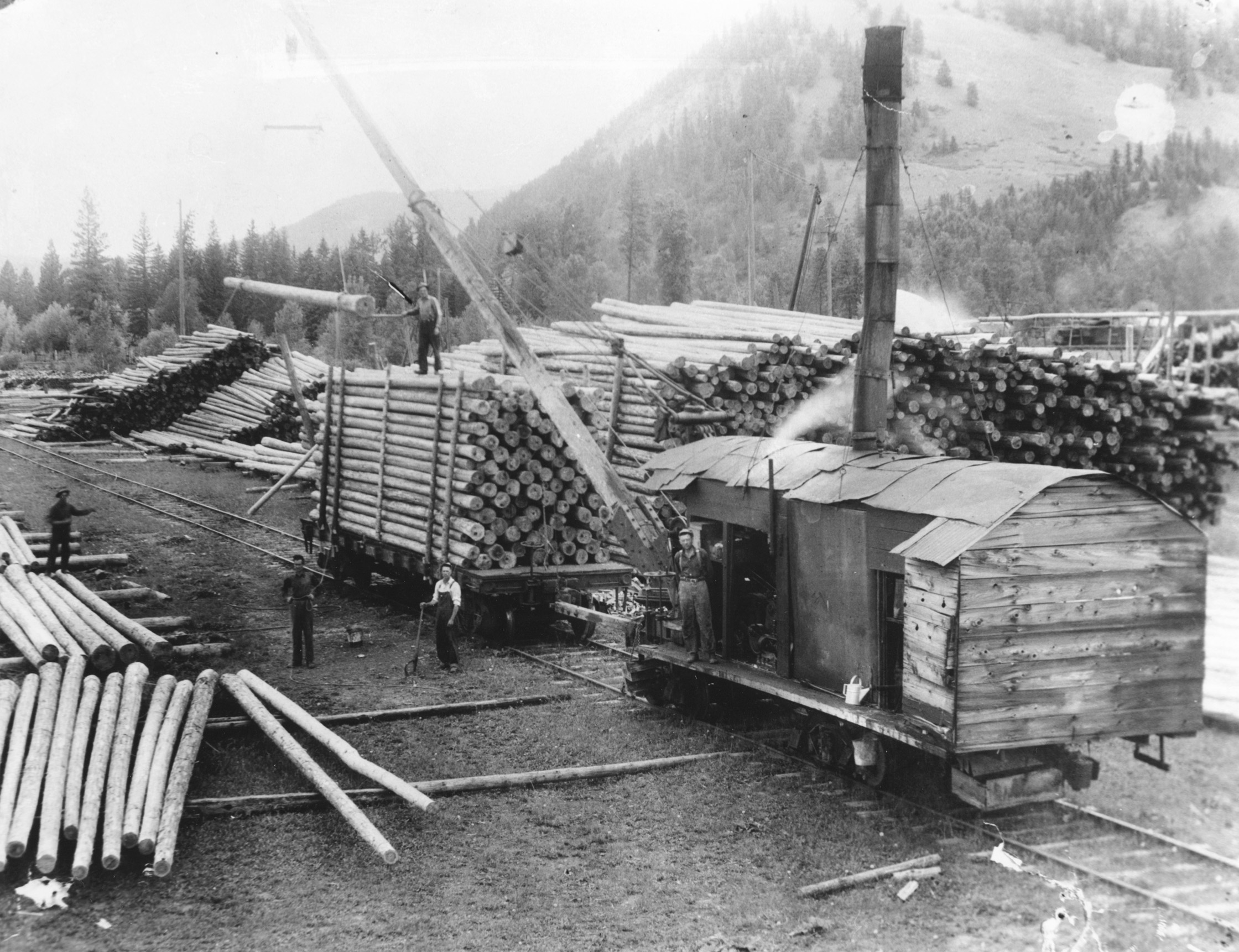
Photo information: Although not the electric tramline once proposed, the arrival of the CNR in Lumby in 1924 supported the growth of local industry, particularly logging. Pictured here is a donkey engine and crane loading logs onto a train in Lumby during the 1930s.
Archives Manager, Gwyneth Evans