
September 19, 2026
Vernon’s new Active Living Centre is only a few months away from opening its doors, and anticipation is building throughout the community. More than 60 years ago, Vernonites experienced a similar sense of excitement as a new recreation facility took shape. The Recreation Centre, now an aging but well-loved community landmark, represented an important investment in recreation and community life when it opened in 1966.
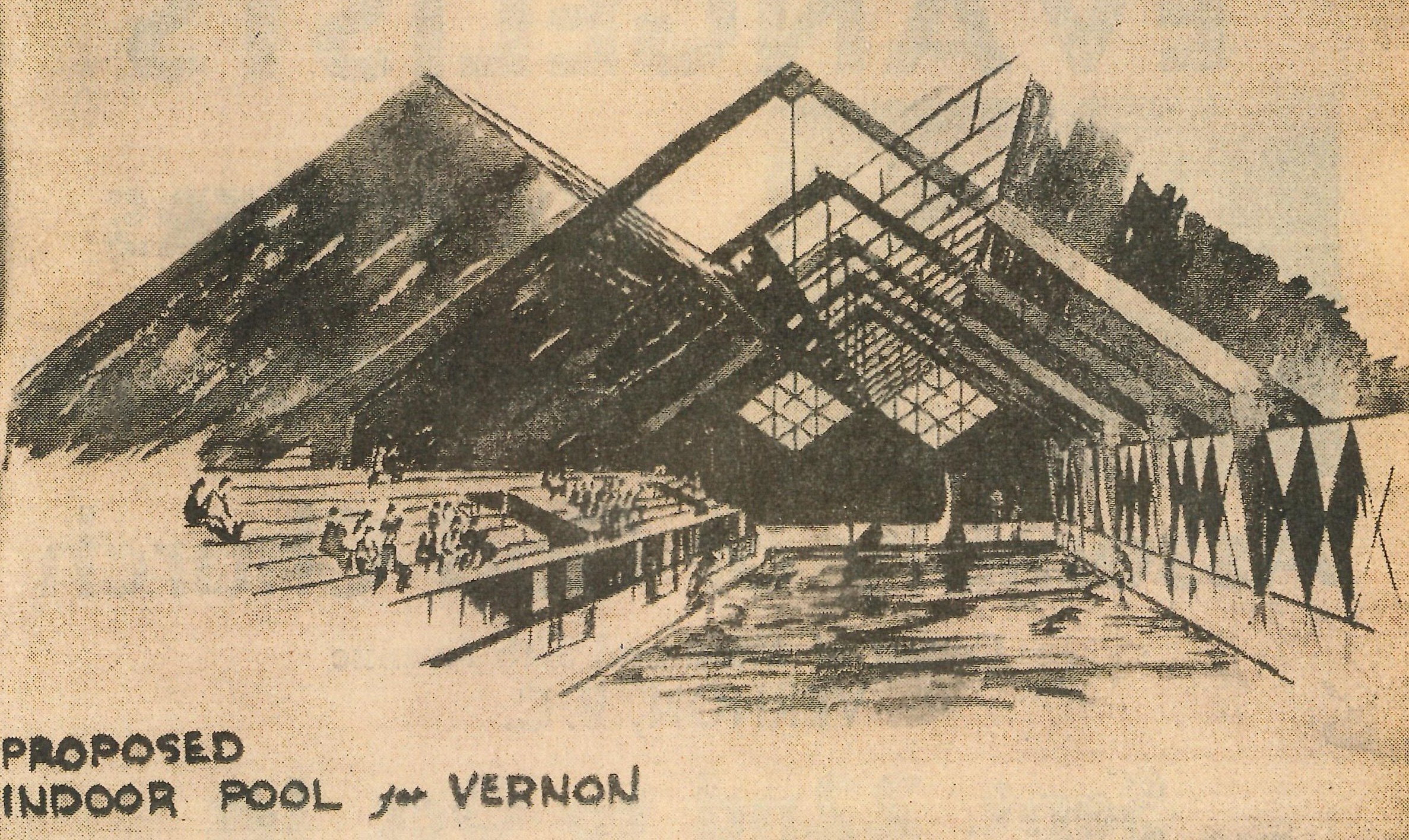
In 1961, Vernon residents got their first glimpse of the proposed swimming pool when an artist’s concept of the design was published in the Vernon News. By then, support for the project had grown among Vernon City Council, the Vernon Chamber of Commerce, and delegates from several local service clubs.
The pool was designed by local architect Terry Gower, who established his architectural practice in the late 1950s after working for a firm in San Francisco. Gower worked with architects Drew Allen, Doug Huggins, and Roy Meiklejohn on the recreation centre as a whole. The project was officially approved in 1964, and construction began the following year.
The Recreation Centre officially opened in May 1966 as part of the larger Vernon Civic Complex. The facility included a swimming pool, gymnasium, assembly hall, and kitchen, offering public swimming along with classes and programs for seniors, adults, students, and school groups.
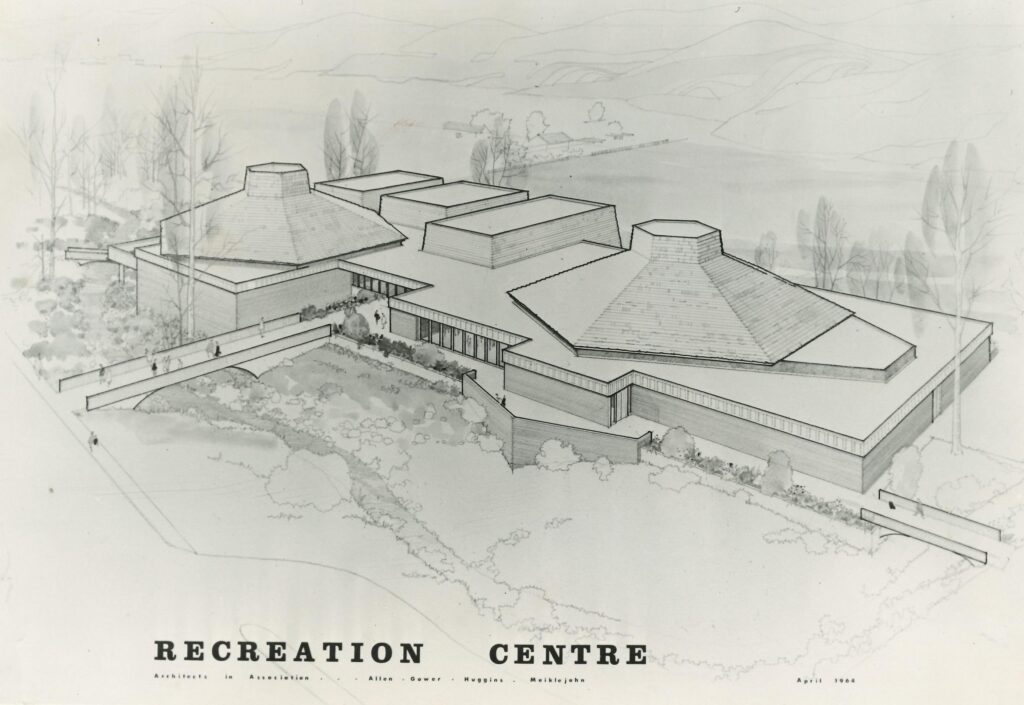
The complex continued to expand in the following years. An outdoor skating rink and multipurpose court were added in 1971, supported by donations from the Vernon Kiwanis, Lions Club, Kinsmen, and Rotary. A curling rink and convention centre opened in 1972, followed by the Halina Centre in 1973. The neighbouring Priest Valley Arena opened in 1978.
Over the decades, the Recreation Centre became an important gathering place for Vernon residents, hosting recreation programs, community activities, and longstanding local events such as Creative Chaos. Its importance to the community was particularly apparent in the early 2000s, when the future of the Creekside Conference Centre portion came under review. A proposal to convert the space to offices met with opposition from residents who wanted it to remain available for public use. Public opposition ultimately resulted in the plans being abandoned.
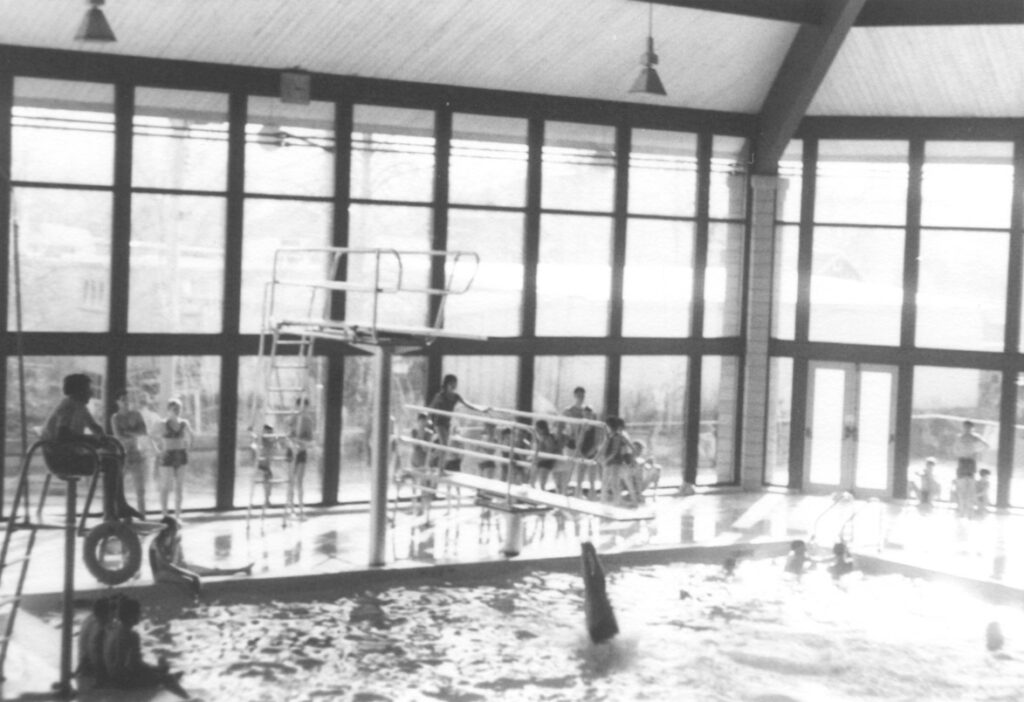
Despite its continued use, the Recreation Centre has faced the challenges of aging infrastructure. Frequent servicing and repairs have become necessary, including replacement of the leisure pool’s air-handling unit in 2021.
Once the Active Living Centre is complete, the Recreation Centre’s pool will be decommissioned as its mechanical, filtration, and air-handling systems have become increasingly costly to maintain. Other portions of the facility will continue to provide spaces for dryland activities, gym sports, and community use.
As Vernon prepares to welcome its newest recreation facility, the history of the Recreation Centre offers a reminder that today’s community landmarks were once new additions that generated their own excitement and anticipation.
Archives Manager, Gwyneth Evans