
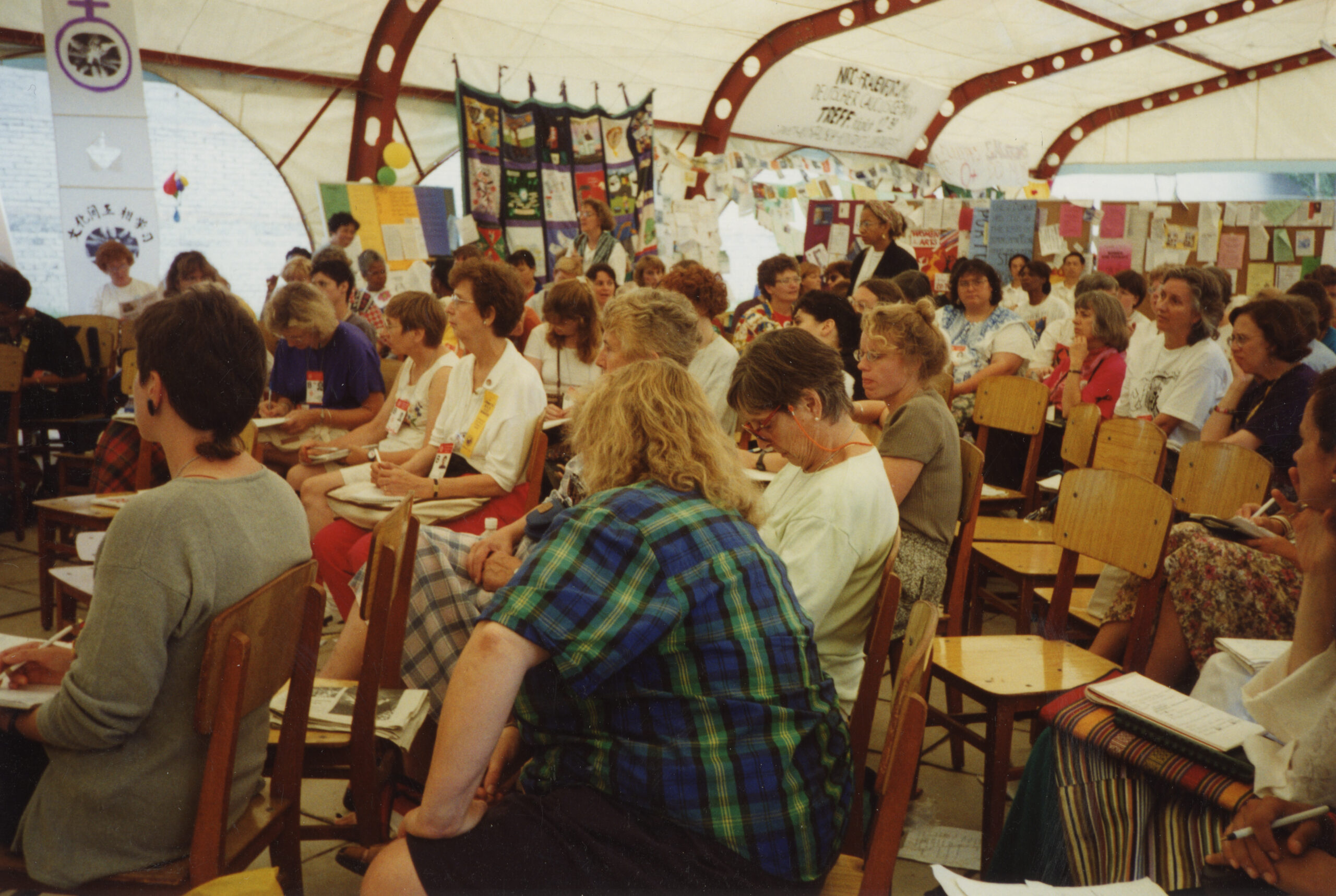
October is Women’s History Month, a time to recognize the contributions and advocacy of people who have advanced gender equity in our communities. Those interested in exploring the history and legacy of the suffrage movement in the Okanagan are invited to visit the Vernon Museum’s new feature exhibit Votes, Voices, Victory!
While the fight for the vote marked a major turning point in Canadian history, efforts toward equality continued through the second and third waves of feminism. Vernon became home to several organizations and individuals who carried that work forward in different ways.
In 1965, the Vernon Chapter of the Canadian Federation of University Women (CFUW) was established. The national organization was founded in 1919 to improve the status of women and promote public education, human rights, social justice, and peace in Canada and abroad. Among the first members of CFUW Vernon was local educator Hilda Cryderman, who served on the inaugural executive.
Around the same time, the federal government created the Royal Commission on the Status of Women in Canada to gather input on how to improve gender equality. Although Vernon was not originally on the list of scheduled stops, commissioner Lola Lange visited the city and attended a meeting arranged by CFUW Vernon.

By the early 1980s, feminist organizing in Vernon expanded with the founding of the Vernon Women’s Centre. The Centre became a driving force for activism in the Okanagan through its involvement in the Okanagan Women’s Coalition, a valley-wide support network. It provided essential resources for survivors of domestic and sexual violence, advocated for reproductive rights, and offered workshops on pay equity and financial independence.
Community members also responded to national events. Following the 1989 École Polytechnique massacre in Montreal, Vernon residents organized vigils, protests, and public discussions calling for stronger protections and policies to address gender-based violence. In the 1990s, the Okonagan Womyn’z Alliance, an intersectional Indigenous feminist group, was also active in the region.
Local engagement extended beyond the Okanagan. In 1995, several Vernon-area delegates attended the United Nations Fourth World Conference on Women in Beijing, bringing global attention to issues of gender equity and human rights. Take Back the Night marches, part of a global movement against sexual and domestic violence, were held in Vernon regularly, including a 2002 march that featured a full-sized effigy of B.C. Premier Gordon Campbell.
From suffragists to second-wave feminists and beyond, Vernon’s residents have long organized for equity, safety, and social change. This Women’s History Month, their stories remind us that the pursuit of equality is an ongoing effort shared across generations.
Archives Manager, Gwyneth Evans