
September 9, 2026
Canada has been the site of some of the world’s most famous dinosaur discoveries, including Albertosaurus sarcophagus, which was discovered by Geological Survey of Canada geologist Joseph Tyrrell in Alberta in 1884, near what is now Drumheller. Alberta’s badlands have since become famous for their dinosaur fossils, including some of the iconic Tyrannosaurus rex. Dinosaurs once lived across much of what is now western North America, so why have we never found a dinosaur fossil in the Okanagan Valley?
The simplest answer may be the age of the rocks. Much of the exposed bedrock in the Okanagan Valley dates to a time long after the non-avian dinosaurs disappeared, meaning the rocks and sediments we see today are simply too young to contain fossils from the age of the dinosaurs. Fossilization is also an extremely rare process, requiring a particular combination of conditions for remains to be preserved rather than destroyed by decomposition, scavenging or erosion. Although dinosaurs may have lived in the broader region millions of years ago, the geological record that remains exposed in the Okanagan does not preserve that part of their history.
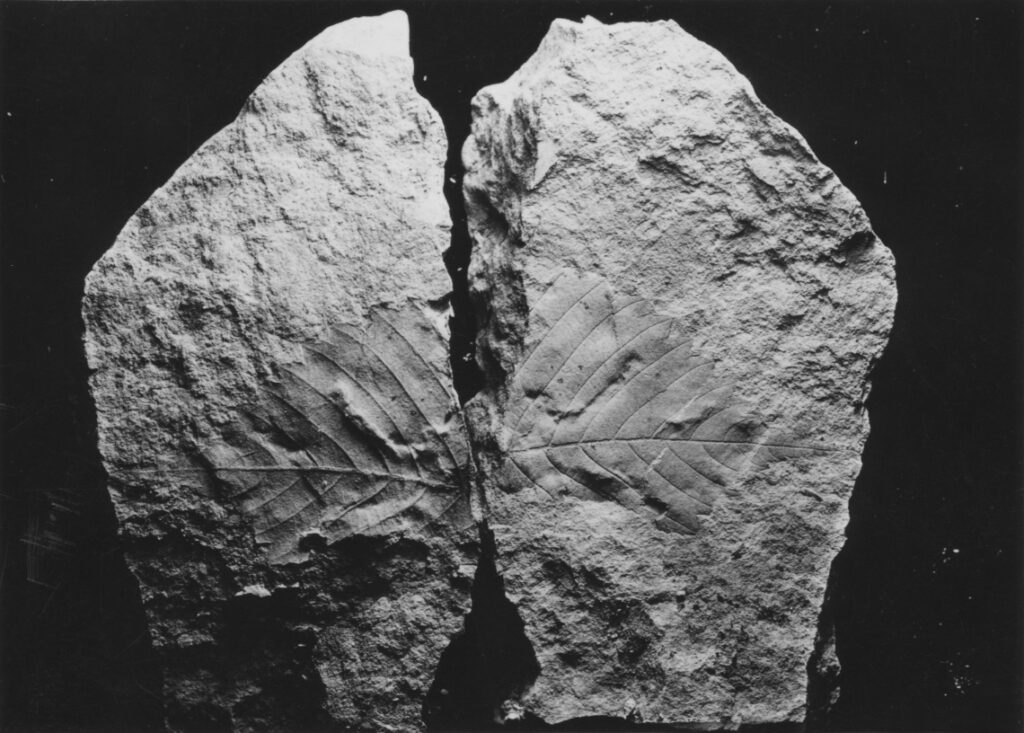
That does not mean the Okanagan and surrounding region are without fascinating fossils. The nearby Okanagan Highlands contain some of British Columbia’s most significant Eocene fossil sites, with ancient lake sediments preserving detailed fossils of plants, insects and fish from roughly 50 million years ago. These fossils offer a glimpse into a very different landscape, one that existed millions of years after the dinosaurs had disappeared.
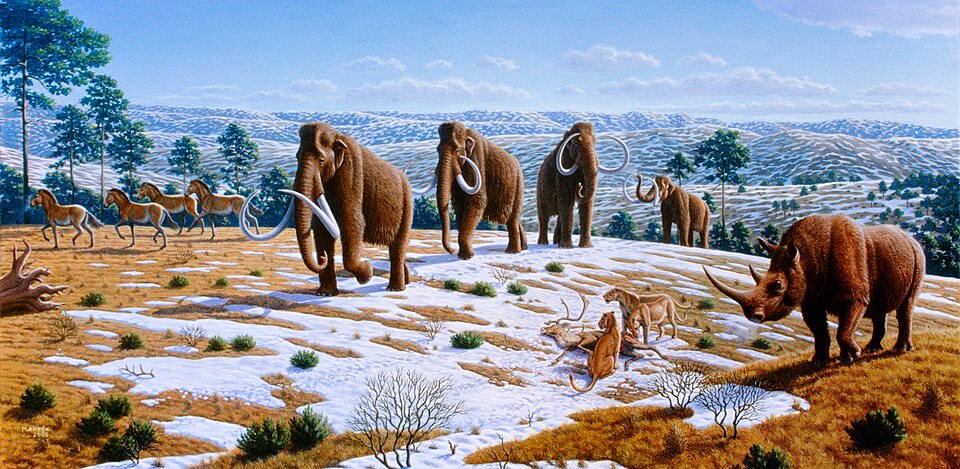
Much more recently, during the Pleistocene Ice Age, the Okanagan Valley itself was home to some considerably larger animals, including mammoths. Mammoth teeth and tusks have been found in several locations throughout the Valley, and the Museum & Archives of Vernon has at least eight mammoth remains in its collection.
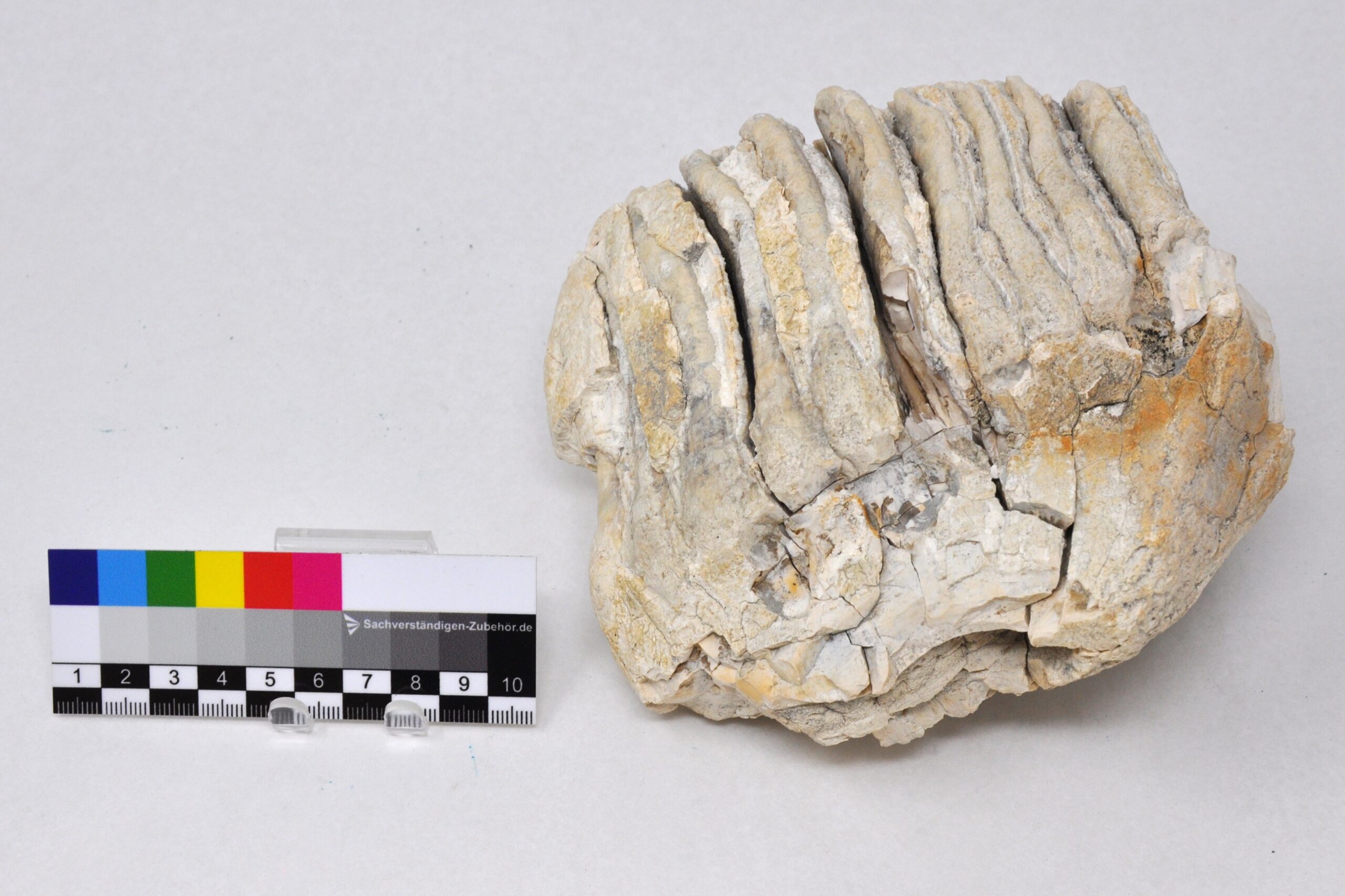
Mammoths made their way into North America through Beringia, the land connection that once linked Siberia and Alaska, and both woolly and Columbian mammoths lived in the region. Research has also shown that these two types of mammoths interbred in areas where their ranges overlapped.
Despite their success across the continent, mammoths disappeared from most of North America near the end of the Ice Age. The reasons for their extinction remain debated, with changes in climate and vegetation, as well as human activity, all potentially playing a role.
So, will a dinosaur ever be found in the Okanagan Valley? Based on what we currently know about the region’s geology, it seems unlikely, but the fossil record is far from complete. Perhaps one day, you’ll be the person to discover the first Okanagan dinosaur.
Archives Manager, Gwyneth Evans